Classrooms in Crisis: The Hidden Toll of South Bay's Teacher Exodus
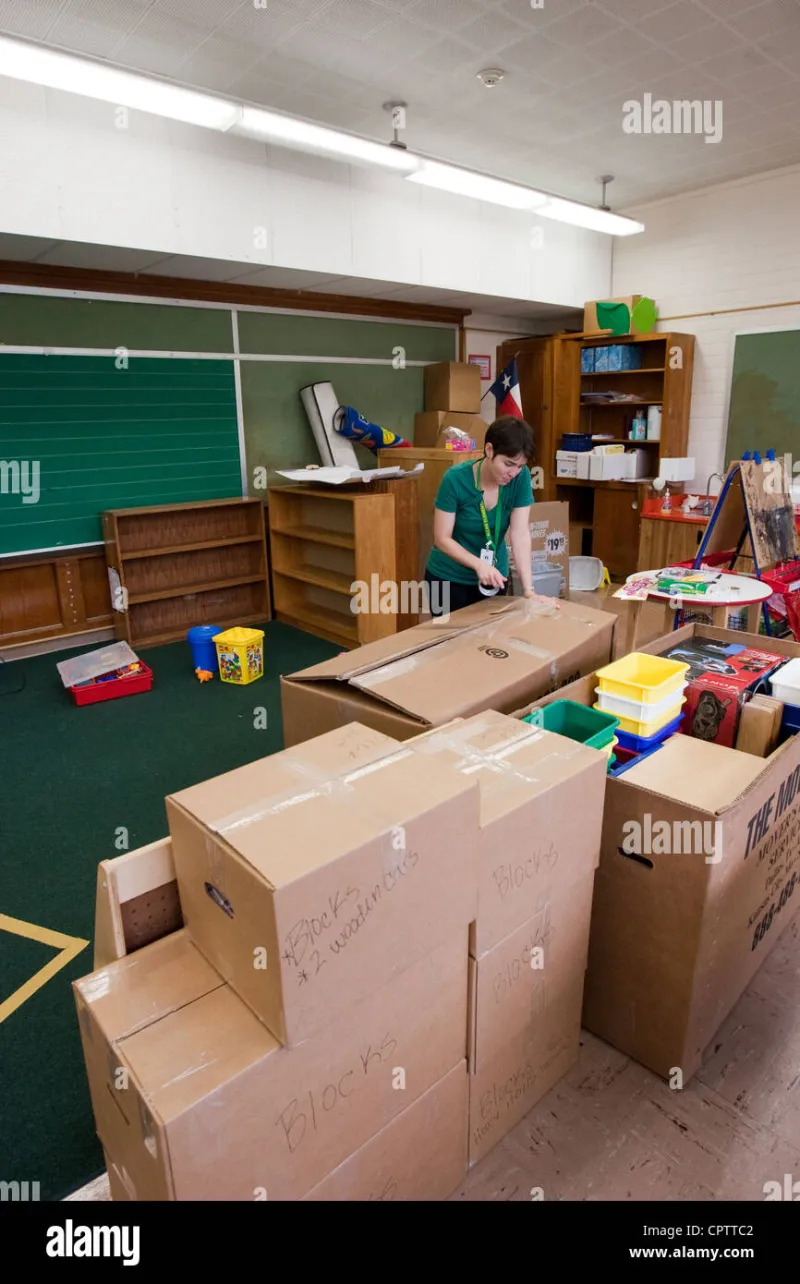
Photo: teacher leaving classroom packing boxes school hallway, via c8.alamy.com
On her last day at a South Bay middle school, Maria Delgado packed up twelve years' worth of classroom decorations — the kind of stuff that accumulates when you genuinely believe you're somewhere for the long haul. Motivational posters. Laminated vocabulary charts. A small cactus she'd named after a former principal. She'd accepted a position in the Central Valley, where a district was offering a $12,000 signing bonus and housing assistance. "I didn't want to leave," she said. "But I couldn't keep choosing a place that wasn't choosing me back."
Delgado's story isn't unique. Across South Bay school districts, administrators are watching their most seasoned teachers walk out the door — and struggling to fill the gaps with qualified replacements. What's driving this exodus is a tangle of economic pressure, institutional neglect, and a cost-of-living environment that's become genuinely hostile to middle-income workers.
The Numbers Don't Lie
According to data compiled from multiple South Bay unified school districts, teacher vacancy rates have climbed steadily over the past four years. Several districts reported that more than 15 percent of their credentialed teaching positions were either unfilled or staffed by long-term substitutes at the start of the most recent school year — a figure that education researchers consider a red flag for systemic instability.
Retention is the other half of the problem. While recruiting new teachers has always been competitive, the more alarming trend is how quickly newer hires are leaving. One district human resources director, who asked not to be named because she wasn't authorized to speak publicly, said her office has seen a sharp rise in teachers resigning within their first three years. "We're spending resources to recruit and onboard people, and then they're gone before they ever really hit their stride," she said.
When the Rent Eats Your Raise
South Bay's cost of living is a well-documented pressure point, but its specific impact on teachers often gets glossed over in broader housing conversations. A first-year teacher in the area typically earns somewhere between $48,000 and $58,000 annually, depending on the district. That sounds reasonable until you factor in that the median rent for a one-bedroom apartment in much of South Bay has pushed past $2,200 a month.
Do the math and you're left with a profession that requires a four-year degree, a credential program, and ongoing professional development — but pays wages that barely cover basic living expenses in the region where the jobs actually are.
James Ortega taught high school history for seven years before accepting a remote curriculum development role with an education tech company. He now earns 40 percent more and works from his apartment. "I loved the kids. I was good at the job," he told us. "But I was one car repair away from financial crisis every single month. That's not sustainable."
What's Happening Inside the Classroom
The real-world fallout lands squarely on students. When experienced teachers leave, what typically replaces them is a rotating cast of substitutes, emergency-credentialed instructors, or overwhelmed colleagues absorbing extra course loads. Continuity — the thing that research consistently shows matters most for student achievement — gets shredded.
Parents in several South Bay communities have started noticing. At a recent school board meeting in one district, a parent raised concerns about her daughter's English class going through four different teachers in a single semester. "My kid stopped doing the reading because she said, 'What's the point? Nobody's going to be here long enough to grade it anyway,'" the parent said. "That's heartbreaking."
Education advocates point out that the impact is especially acute in schools serving lower-income neighborhoods, where turnover rates tend to be highest and resources are thinnest. "The kids who need the most stability are getting the least of it," said Renee Castillo, an advocate with a South Bay-based education equity nonprofit. "That's not an accident — it's the result of policy choices that keep getting deferred."
The Support Gap Nobody Talks About
Money is the loudest part of this conversation, but veteran teachers and administrators will tell you it's not the only part. Several educators we spoke with described a workplace culture where support structures have quietly eroded — mentorship programs cut for budget reasons, mental health resources for staff that exist on paper but not in practice, and administrators so overwhelmed by compliance demands that actual instructional coaching has become a luxury.
"I had a student in crisis almost every week," said one elementary school teacher who left the profession entirely last spring. "There was no counselor available. No protocol. It was just me, alone in a classroom, trying to teach fractions while also managing a child's trauma. Nobody prepared me for that, and nobody helped me through it."
Burnout, she said, wasn't a slow burn. It was a cliff.
What Districts Are — and Aren't — Doing
Some South Bay districts have made genuine efforts to address retention. Housing assistance partnerships with local developers, loan forgiveness programs, and tiered salary schedules that reward longevity have all appeared in various forms across the region. But advocates say these efforts are scattered and underfunded relative to the scale of the problem.
State-level funding formulas remain a persistent obstacle. California's school finance system, while improved by Local Control Funding Formula reforms, still leaves many South Bay districts in a structural bind — particularly those serving higher-cost areas without proportionally higher property tax bases.
At the local level, school board priorities matter enormously. Districts that have made teacher compensation and working conditions a genuine budget priority — not just a talking point — tend to show better retention numbers. The question is whether enough boards are willing to make the hard trade-offs required to get there.
What Comes Next
Maria Delgado, the teacher who packed up her cactus, says she doesn't regret leaving. But she also says she checks in on her former colleagues regularly, and what she hears worries her. "The people who are still there are exhausted. They're doing the work of two or three teachers. And every year, a few more of them hit their limit."
For South Bay families, the stakes are straightforward: the quality of a child's education depends heavily on the stability and experience of the adults in the room. Right now, that stability is eroding — not because teachers don't care, but because the systems around them keep failing to hold up their end of the deal.
Fixing it will require more than a feel-good appreciation week. It'll require money, policy reform, and a genuine reckoning with whether South Bay communities are serious about the schools they say they value.