Packed Up and Gone: The Young Talent Exodus Reshaping South Bay's Future
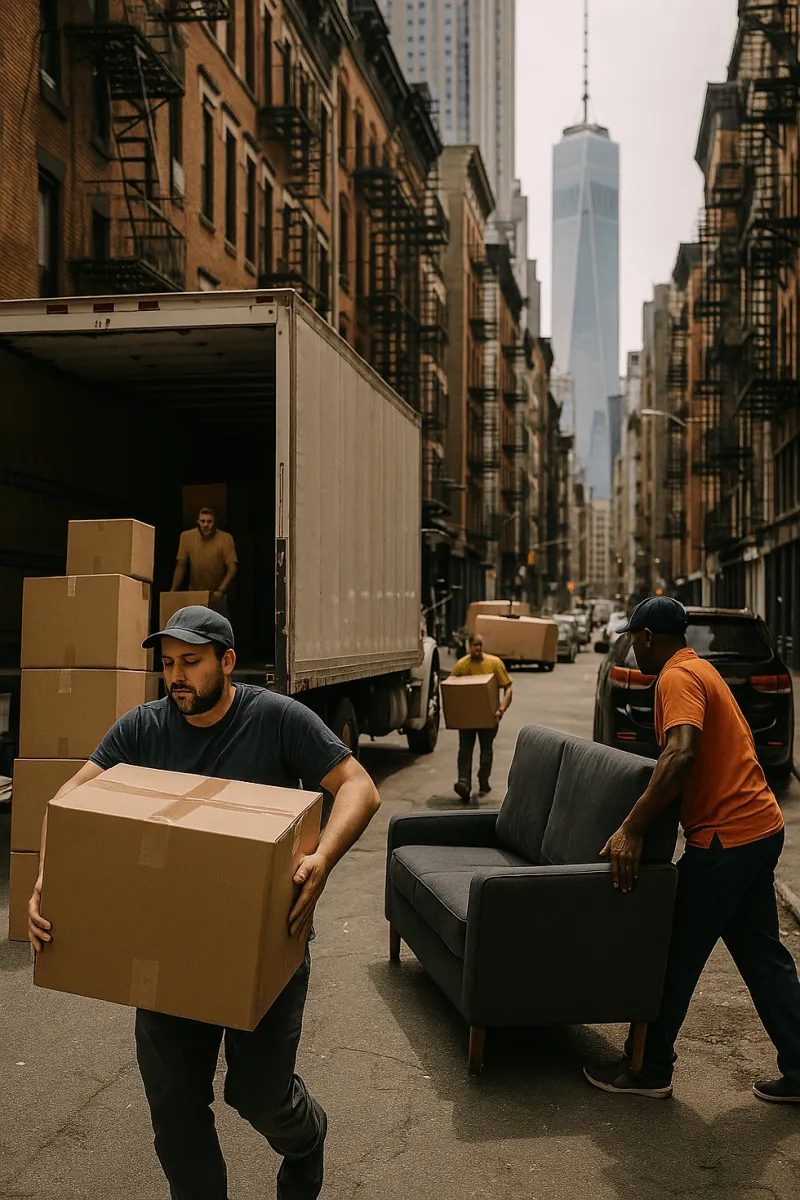
Photo: young professional packing moving boxes leaving city neighborhood, via static.wixstatic.com
Drive through certain South Bay neighborhoods on a Tuesday afternoon and something feels a little off. The parks aren't as crowded as they used to be. A few storefronts that once catered to young families sit empty. The faces at city council meetings skew older — noticeably so.
It's not your imagination. South Bay is in the middle of a slow, steady departure of young residents, and the people who study these trends say the consequences go far beyond population numbers on a spreadsheet.
"You lose the young professionals, you lose the tax base, you lose the volunteer energy, you lose the people who are going to be running for school board and city council in ten years," said one longtime civic organizer who asked not to be named because she still works with several local agencies. "It's a compounding problem."
The Numbers Behind the Feeling
California's Department of Finance has tracked net domestic out-migration from coastal counties for several consecutive years, and South Bay communities — while not always making headlines — are contributing to that trend. Younger cohorts, particularly adults between 25 and 40, are disproportionately represented among those leaving.
The reasons aren't a mystery, but they're layered in ways that make simple fixes difficult. Housing costs sit at the top of nearly every list. A two-bedroom rental in many South Bay cities now runs well north of $2,800 per month, and starter home prices have pushed past the $900,000 mark in several zip codes. For someone earning a solid middle-class income — a teacher, a nurse, a small business owner — the math simply doesn't work the way it once did.
"I grew up here," said Marcus T., 34, who relocated to the Phoenix metro area with his wife and toddler two years ago. "My parents bought their house in the late '90s for under $300,000. I was looking at the same style house, same neighborhood basically, and it was $1.1 million. That's not a gap you close by cutting back on avocado toast."
Marcus isn't alone in that calculus. Across a dozen conversations with former South Bay residents now living in states like Texas, Nevada, and Arizona, the refrain was consistent: they didn't want to leave. They felt pushed.
It's Not Just Housing
But reduce this to a housing story and you miss something important. Several people we spoke with pointed to job market dynamics as an equally powerful force. Remote work changed the equation for a lot of professionals. If you can do your tech job from anywhere, the premium you pay to live near the coast starts looking a lot less justifiable.
Jessica L., 31, left the South Bay for Austin three years ago after her company went fully remote. "The tipping point was realizing I was paying $2,400 a month for a one-bedroom apartment, and I wasn't even commuting anymore," she said. "In Austin I got a two-bedroom house with a yard for $1,600. It wasn't even a hard decision at that point."
Quality of life concerns also surfaced repeatedly in our conversations — and not always in the ways you might expect. School crowding, traffic infrastructure that hasn't kept pace with density, and a perceived lack of third spaces (the coffee shops, community centers, and parks where neighbors actually meet each other) all came up organically.
"There's this weird thing where South Bay has everything on paper — the weather, the coast, the culture — but day-to-day life can feel really isolating if you don't already have roots there," said Daniel R., 29, who moved to Denver after three years in the South Bay. "I never really felt like I belonged to a community. I just lived there."
What Local Officials Are (and Aren't) Doing
Some cities in the South Bay have started to take the retention question seriously, at least rhetorically. Workforce housing initiatives, down payment assistance programs, and zoning reforms aimed at increasing housing supply have all been discussed at various municipal levels. The implementation, however, has been inconsistent.
At a recent city council meeting in one South Bay municipality, a housing element update that would have permitted more multifamily development near transit corridors was tabled after pushback from established homeowners concerned about neighborhood character. It was a familiar scene to housing advocates who have watched similar proposals stall across the region for years.
"The people who show up to fight density are organized, they're vocal, and they vote," said one city planning staffer, speaking informally. "The 28-year-old who might benefit from that housing isn't in the room — because they haven't moved here yet, or they've already left."
That political dynamic is part of what makes the brain drain self-reinforcing. Younger residents, who tend to support more housing production and progressive infrastructure investment, leave. Their absence shifts the political center of gravity toward the preferences of longer-tenured homeowners. Policies that might have attracted or retained younger residents become harder to pass. Repeat.
What Could Actually Help
The people we spoke with — both those who left and those who stayed — offered some consistent ideas for what might move the needle.
First, meaningful housing supply. Not token inclusionary units tacked onto luxury developments, but genuine mid-market housing production at scale. Several cities in the South Bay have the zoning capacity to do more; the question is political will.
Second, economic diversification. South Bay's job market, while not weak, skews heavily toward certain sectors. Expanding opportunities in emerging industries — clean tech, healthcare innovation, creative industries — could make the region more attractive to younger workers who aren't in traditional coastal-economy fields.
Third, community infrastructure investment. More community centers, better parks programming, improved transit connectivity, and intentional efforts to build social fabric. "People stay where they feel like they matter," said one community organizer. "That sounds soft, but it's real."
Finally, and perhaps most importantly, local government needs to actually listen to younger residents — not just during election cycles, but in the ongoing governance of cities. Youth advisory councils with real input, not just ceremonial seats at the table, could help bridge that gap.
The Clock Is Ticking
None of this is inevitable. South Bay has genuine assets — geography, cultural richness, existing infrastructure, a legacy of civic engagement — that many regions would envy. But assets don't retain residents on their own. Policy does. Investment does. A sense of belonging does.
The young people who have left weren't rejecting the South Bay so much as responding rationally to conditions that made staying feel impossible. The question for local leaders isn't whether those residents can be replaced. It's whether they can be persuaded to come back — or whether the next generation ever leaves in the first place.
That answer will be written, one zoning vote and budget line item at a time, in the years ahead.